

A handyman can legally handle simple plumbing swaps in Colorado, like replacing a faucet, toilet, sink, garbage disposal or dishwasher. Anything beyond that, such as new or rerouted water lines, drain and sewer piping, gas lines or work that needs a permit, should go to a licensed plumber. Colorado law requires anyone working as a residential, journeyman or master plumber to hold a state license, and plumbing contractors must register and have a master plumber overseeing their work. The simple rule: if you are swapping a fixture, a handyman may be fine; if you are changing the plumbing behind the wall, call a licensed pro.
Table of Contents
ToggleKey Takeaways
- Colorado exempts basic fixture swaps from plumbing license rules.
- New piping, drain lines and sewer work belong with a licensed plumber.
- Plumbing contractors must register and be overseen by a master plumber.
- Homeowners can do plumbing on their own home, but rentals have stricter rules.
- Gas lines and water heaters often need permits and inspections.
- You can check any plumber’s license on the state’s lookup tool.
- Cheap work that fails inspection usually costs more to fix later.
A leaky faucet and a failing sewer line are very different jobs, but both start with the same question: who do I call?
For many homeowners, the choice comes down to licensed plumber vs handyman, and the answer depends on what is actually being changed.
Below we break down what Colorado law allows each to do, where the line falls and how to pick the right person for the job.
What Can a Handyman Legally Do With Plumbing?
A handyman can repair and replace basic fixtures without a plumbing license in Colorado. State law exempts the repair, maintenance and replacement of sinks, faucets, drains, showers, tubs and toilets, plus garbage disposals and dishwashers connected to the drain.
That covers a lot of everyday jobs. Swapping an old faucet, replacing a toilet or putting in a new disposal can all fall under that exemption.
For these small swaps, a good handyman can be a reasonable choice. The work connects new fixtures to plumbing that is already there.
What Work Needs a Licensed Plumber?
A licensed plumber is the right call when the job changes the plumbing system itself. That includes installing or rerouting water lines, replacing drain or sewer piping, working on gas lines and any job that needs a permit and inspection.
Common examples include:
- Moving a sink, adding a bathroom or rerouting supply lines.
- Repairing or replacing a sewer line or main drain.
- Installing or repairing gas lines for appliances.
- Fixing a leak inside a wall, ceiling or under the floor.
- Diagnosing low water pressure across the whole house.
- Backflow testing and repair.
These jobs carry more risk. A mistake can mean hidden water damage, a sewer backup or a gas leak, and it can also cause problems when you sell the home.
What Does a Colorado Plumbing License Require?
Under Colorado law, anyone working as a residential, journeyman or master plumber must hold a license from the state.
Plumbing contractors must also register with the State Plumbing Board and either be, or employ full time, a master plumber who oversees all plumbing work.
Apprentices can do plumbing work, but they must be registered and work under licensed supervision.
Working as a plumber without the required license is a violation with penalties under the same law. The rules are set out in Article 155 of Title 12 of the Colorado Revised Statutes.
A Colorado plumbing license is earned through training, work hours and exams. It shows the person knows the plumbing code, not just how to tighten a fitting.
What About Homeowners Doing Their Own Plumbing?
Colorado lets you do plumbing work on your own property or residence without a license. You can also hire someone for routine repair and replacement of fixtures like sinks, faucets, toilets and drains.
That exemption does not cover every property. If a home is being sold by a builder or remodeler, rented to tenants or used as a commercial building, the owner is responsible for following the state’s licensing rules.
Local permits may still apply even when no license is needed, so check with the city before starting bigger projects.
Handyman and Licensed Plumber Side by Side
| Factor | Handyman | Licensed plumber |
|---|---|---|
| State plumbing license | Not required for basic fixture swaps | Required |
| Faucet, toilet or sink swap | Yes | Yes |
| New or rerouted water lines | No | Yes |
| Sewer and drain line repair | No | Yes |
| Gas line work | No | Yes |
| Permit-ready work | Limited | Yes |
| Diagnosing hidden problems | Limited tools | Camera inspections and diagnostic tools |
| Best for | Simple swaps on existing plumbing | Anything behind the wall or under the ground |
When a Handyman Can Make Sense
A handyman can be a sensible choice for small, clear-cut jobs where the plumbing itself does not change.
That usually includes:
- Replacing a faucet with one that fits the same connections.
- Swapping a toilet on an existing flange.
- Installing a new garbage disposal or dishwasher in the same spot.
- Replacing a showerhead or a sink drain assembly.
Even here, ask about experience. A bad seal on a toilet or a loose drain fitting can leak slowly for months before you notice.
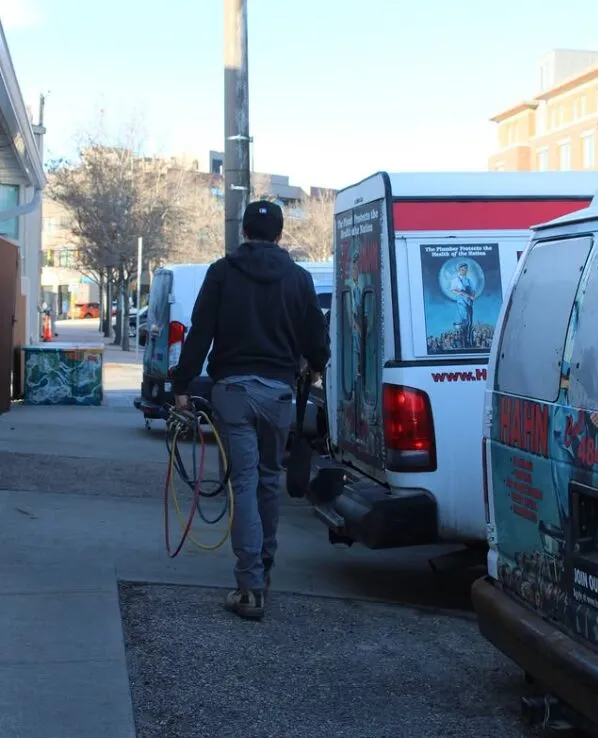
When to Call a Licensed Plumber Instead
Some signs mean the job has moved past a simple swap.
- The leak keeps coming back after a repair.
- Water pressure is low in more than one fixture.
- Several drains are slow, or water backs up into a tub or floor drain.
- You smell sewage or gas.
- The job needs a new line, a moved fixture or a permit.
Our post on when to call a plumber walks through more of these warning signs in detail.
Not sure who your job needs? Tell us what is going on, and we will let you know whether it is a quick fix or a bigger repair. Get an estimate.
Is the Cheaper Option Really Cheaper?
Many people search for an affordable plumber Fort Collins homeowners trust, and price matters. But the lowest hourly rate is not always the lowest total cost.
A handyman may cost less per hour for a faucet swap. For a sewer, gas or in-wall job, though, work done without the right license or permit can fail inspection or need to be redone.
That can mean paying twice and dealing with water damage in between. For complex jobs, the right person the first time is usually the cheaper choice.
How to Check a Plumber's License in Colorado
You do not have to take anyone’s word for it. The Colorado State Plumbing Board offers a license lookup where you can confirm a plumber or contractor is licensed and in good standing.
Before you hire, ask:
- Are you a licensed plumber, and what is your license number?
- Is your company registered as a plumbing contractor in Colorado?
- Who is the master plumber overseeing the work?
- Will this job need a permit, and will you pull it?
- Are you insured if something goes wrong?
Licensed plumbers Fort Collins homeowners can trust should answer these quickly and without hesitation.
Finding the Best Plumber Fort Collins Homes Can Rely On
The best choice is a team that is licensed, explains the problem clearly and stands behind its work. Local experience with older Fort Collins homes, sewer lines and cold winters also helps.
Hahn Plumbing – Heating – A/C has served Fort Collins since 1967. We are licensed, bonded and insured, and our technicians handle everything from fixtures and water heaters to gas lines, backflow testing and sewer replacement.
When a problem cannot wait, our emergency service covers urgent issues like burst pipes, gas leaks and main sewer backups, even outside normal hours.
Learn more about our work as a plumber Fort Collins families have trusted for decades, or call us to talk to our team.
Frequently Asked Questions
Is a licensed plumber vs handyman a big deal for small jobs?
For simple swaps, not always. Colorado law lets anyone repair or replace sinks, faucets, toilets, showers, tubs, disposals and dishwashers without a plumbing license.
Once a job involves new piping, gas, sewer lines or a permit, a licensed plumber is the safer and often legally required choice.
Can a handyman replace a water heater in Colorado?
Water heater work often needs a permit, and gas water heaters involve gas connections and venting that carry real safety risks. Check your city’s permit rules first. In most cases, it is safer to have a licensed plumber handle the installation so it passes inspection.
Do I need a licensed plumber for my rental property?
Usually, yes. Colorado’s homeowner exemption does not apply to rental property occupied by tenants.
In that case, the owner is responsible for following state licensing rules, so hiring a licensed plumber or registered plumbing contractor is the safest way to stay compliant.
How do I know if a plumber is really licensed?
Ask for their license number, then check it on the Colorado State Plumbing Board’s license lookup. You can also confirm the company is registered as a plumbing contractor with a master plumber in charge. A legitimate plumber will share this information without any hesitation.
Are licensed plumbers in Fort Collins more expensive?
The hourly rate can be higher than a handyman’s, but the total cost is often lower for complex work. Licensed plumbers diagnose the real cause, pull permits when needed and do the job to code, which helps you avoid repeat repairs and failed inspections.
